Tom Rothman
CEO of Sony Pictures

https://www.instagram.com/sonypictures?igsh=MW96YnRkZjEyZ2h5bQ==
What got me into movies, there’s one answer to that. That’s Lawrence of Arabia. And the fact that I ended up working at the studio that is the studio of Lawrence of Arabia—there was something cosmic in that.
first job was as a production executive at Columbia. In that era when I was there, I was fortunate enough to work on the restoration of Lawrence. When I say “work,” that means get the coffee for the legendary Anne V. Coates, who was the original editor of Lawrence, who was doing the restoration work with David Lean, who was very old at the time. I got to see it all happen.
Peter Chernin at 20th Century Fox had given me the support to found a company called Fox Searchlight, which is still around. I think it’s the best of all the indie sensibility companies, but I’m biased.
folks out there on Letterboxd, they don’t care how much a movie costs—they care how it makes them feel.
if there’s a really good film, streamers can always outbid an indie film company, and that is good and bad. It’s good for some young people and good for investors, but maybe not so good for the long run, because some of those movies appear on streaming services, and if the algorithm isn’t in the right mood that day, they disappear. Make an indie film that succeeds at the box office, now you’ve impacted the culture, and impacting culture is the real mark of enduring cinema.
there are two reasons to go out to a movie. One is experiential. “I want to get out of the house. I want to kiss my date. I want to take my kids to see something. I want to experience a comedy with a whole group of communal people. I want that out-of-the-house experience.” The second reason is programmatic. “I want to see that movie.” By shrinking the windows as much as we have shrunk them, Hollywood as a whole, we’ve removed the programmatic reason to see the movies, and this is a crisis.
reason we succeeded with all of those former in-home alternatives that I spoke about—television, HBO, DVDs, et cetera—was that if you wanted to see if you were moved to see a film in the current time in your life, you had to go to the movie theater to see it. Now, it’s like the last lines of Casablanca: “Maybe not today or tomorrow, but soon.” The audience knows that maybe not today or tomorrow, but soon they’re going to get it in the home. This is a great mistake.
If you know that you can get a big, interesting, well-marketed movie at home on TVOD in seventeen days, it robs the programmatic need to go see the movie. This happened because of what happened to the exhibition during COVID, which was a near-death experience, so they had to do whatever it was they had to do to stay alive, which I understand, but they’re alive now. Can one put the toothpaste back in the tube? I don’t know. In the old days before COVID, when the windows were 100 days, that was too long. That was silly, to wait all that time. There’s a great difference between 100 days and seventeen days, so this is a big issue that’s weighing on the recovery of the box office.
Something About Mary totally bombed its first weekend, but people talked about it. It was so fresh and new and so funny. It’s maybe the only movie in history that went to number one in its seventh week, but that was when you had a longer time. We had a great example this past Christmas with a movie called Anyone But You. That movie had a rough opening weekend over Christmas, but then, thanks to social media, thanks to sites like yours, people discovered it. It bounced back enough, but if it doesn’t happen fast, you’re going to be off-screen.
I made six films with Ang Lee. 28 Years Later was my ninth film with Danny Boyle. The Beatles movies, which we’re starting now, will be my third [collaboration] with Sam Mendes.
fortunate and privileged enough to work on four films with Steven Spielberg and multiple films with Jim Cameron. Being able to do repeat business is probably the best sign of respect that creative people can have for someone on my side of the table. That they believe that you’re there for them in hard times as well as good times—that’s the key. It’s easy when it’s easy, but are you there for filmmakers when it’s hard? I believe that has a lot to do with my background, which is that I grew up in the indie world. The first decade of my film life was working with all auteurs. I’ve come to understand that artistic mindset very well.
Quentin’s deal, I can’t take any credit or blame for that. That was Miramax. Interestingly, that was the same deal that I had made when I represented Jim Jarmusch, and it was a common deal in the indie world. We honored a historical deal, but he’s absolutely sui generis and one of a kind in that he creates his own characters entirely, just like Jim Cameron. There are very few true writer-directors who are making original characters.
When I was younger, I was on the Sundance board for many years. I served as a reader for the lab. I was aware of Reservoir Dogs when it was in the lab from the beginning, so I knew who this dude was. When I was at Goldwyn, it was my first real hard lesson. If you want to compete, you better compete hard. We ended up as the number two bidder on Pulp Fiction. Harvey [Weinstein] won the bidding. Well, it took me twenty-some years, but I vowed that if I ever got the chance again, I wasn’t coming in second with that guy. Fortunately, I didn’t, and we were fortunate enough here to have Once Upon a Time… in Hollywood. I’ve heard Quentin say it’s his favorite film, and it’s very clearly one of my most favorite films and most treasured experiences I ever had.
When we went to release Longtime Companion, here’s what happened: there had been gay films that had played in New York and San Francisco and Los Angeles maybe, but there had never been a gay film, certainly not a film where the central narrative device was a death by AIDS, that had played nationwide. That was back when any thought of inclusivity was verboten. I knew the film was great—Bruce Davidson, fantastic, nominated for an Academy Award, should have won—deeply moving, wonderful. It was a love story between two guys, but it didn’t matter if you were gay or straight; if you had a heart, you felt something, right?
must’ve been at least ten, fifteen years before Brokeback Mountain. That’s how pioneering it was, and exhibition wouldn’t book it. They wouldn’t play it in the multiplexes. I picked up the phone and I called the head of each major circuit that we wanted to book, and I said the following: “Hi, I’m Tom Rothman. I’m head of production at Goldwyn and we are trying to get Longtime Companion to play in your theater, and I understand that you don’t want to book it.” The guy would say, “Yeah, well, it’s just not quite right for our audience.” I said, “Okay, that’s fine. I’m doing an interview with the New York Times this afternoon, and I want to be sure to spell your name when I tell them that you won’t play the film. Is your name spelled with a G or a D?” I made that call to about five or six different exhibition circuits, and Longtime Companion played nationwide, did really great business and got multiple Academy Award nominations.
Go Fish, one of the first mainstream lesbian films, we acquired that film out of Sundance. That was an example of how festivals can raise the level of profile. That’s a vital role that cinema plays. It’s crucial.
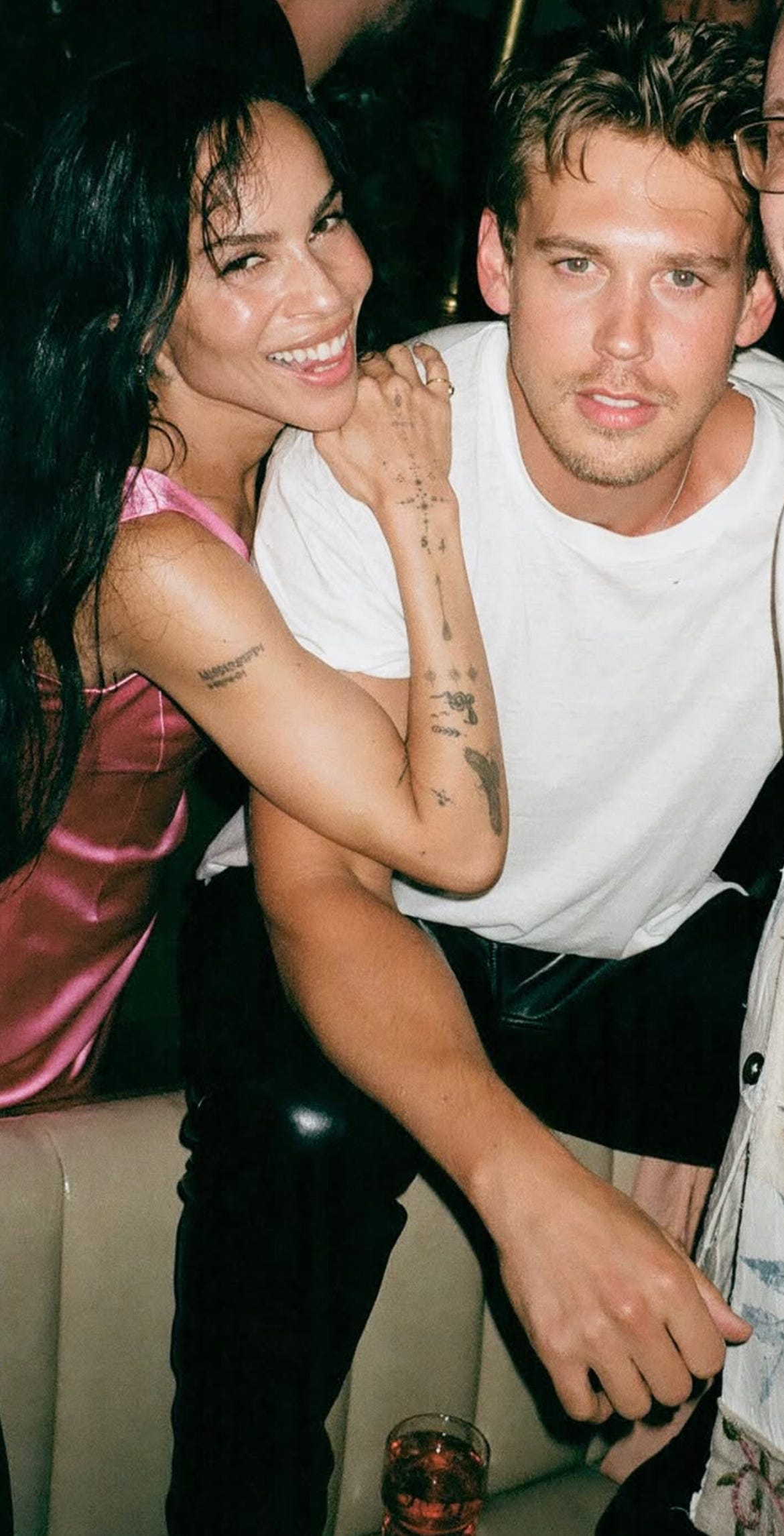
We have a film from Darren Aronofsky called Caught Stealing with Austin Butler. I made a number of movies with Darren over the years—Black Swan, The Wrestler—and I think enormously highly of him as an auteur talent. This is maybe the most fun film he’s ever made.
https://letterboxd.com/journal/tom-rothman-sony-interview/
Tom Rothman is CEO of Sony Pictures, whose “Caught Stealing” stars Austin Butler and Zoe Kravitz.