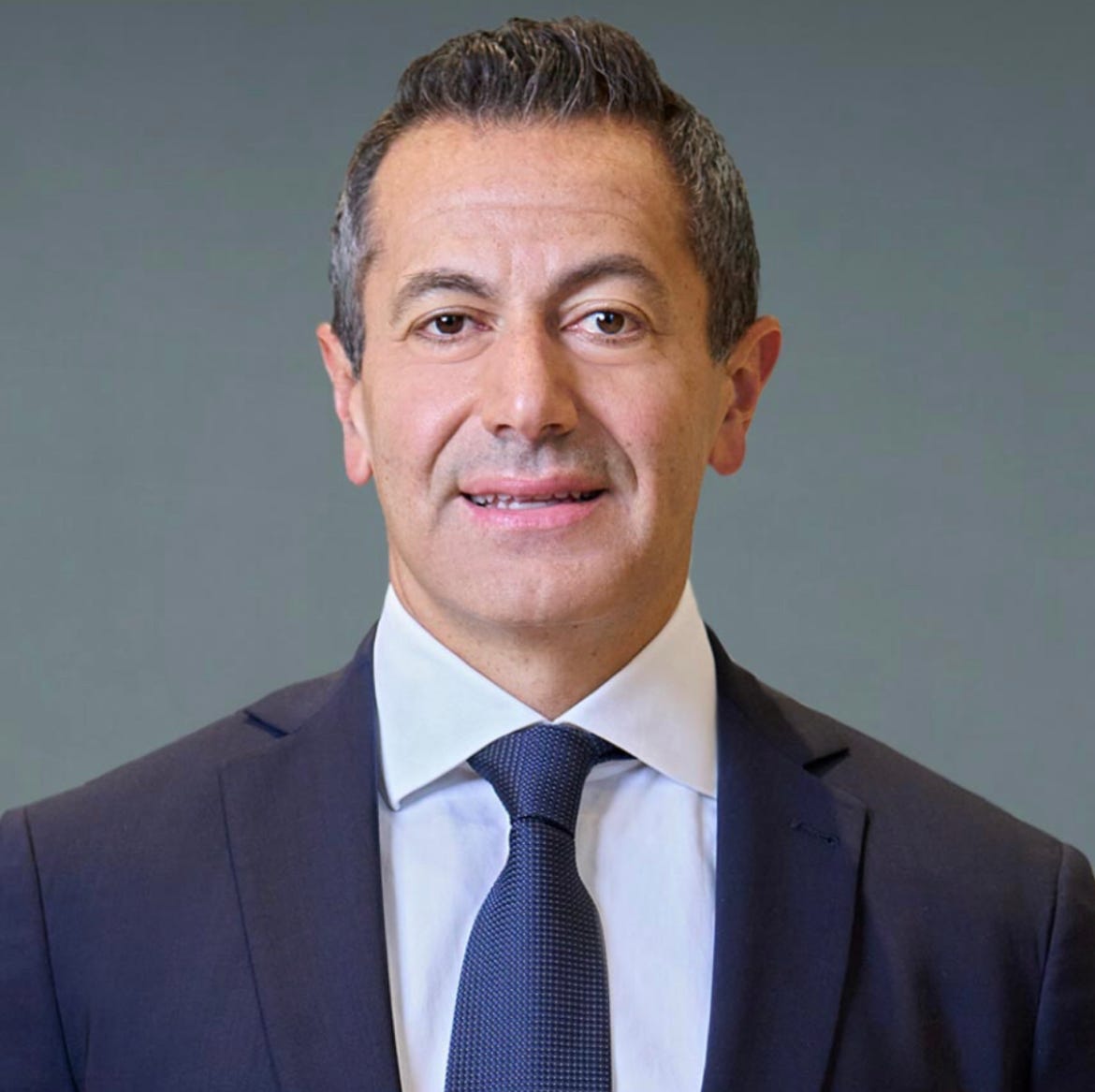
Oren Cahlon
clinical affairs, NYU Langone

https://fortune.com/article/nyu-langone-hospital-robert-grossman-ken-langone-health-data/
Dr. Robert Grossman and Ken Langone
Grossman spoke of his hard-fought path to the top of NYU Langone—“I had no sponsors, no mentors, no coaches. No one was there to introduce me to any ‘important’ people or direct my career”—before imparting 15 nuggets of wisdom he had collected. (No. 1: “It doesn’t matter where you come from, it does matter how high you aim.” No. 5: “Depth of knowledge is very important.” No. 14: “Find the right partner.”)
business partner, Langone, gave him a warm embrace and in his own speech, remarked that his association with Grossman was “one of the most rewarding of his life.”
Thanks to Langone and Grossman, their medical educations had all come tuition-free. And Grossman’s lessons were on point—since they encapsulated the ambition and tenacity that made NYU Langone an enviable success story in American health care.
Two decades ago, NYU’s academic medical center was a troubled institution, treading water; today, it’s one of the country’s most efficient providers of high-quality care, with 53,000 employees, roughly $14 billion in revenue—up from $2 billion in 2007—and more than 320 locations. Its innovations in medical-school education—introducing an accelerated three-year curriculum, and that free tuition—have made its programs models for others around the country. NYU Langone has wooed world-leading talent while scaling the ranks of federally funded research hospitals.
Grossman, a neuroradiologist who had no formal business training when he became CEO and dean of the medical center in 2007; and Ken Langone, the billionaire co-founder of Home Depot who has chaired its board—and given so much time and money to the institution that it now bears his name—since 1999. (Langone, who is also a major Republican donor, later honored Grossman by naming NYU Langone’s two medical schools after him.)
the two men, 78 and 89 respectively, are eager to tell as they prepare to hand over their roles to carefully selected successors come September 1.
In 2023, 48% of the nation’s rural hospitals operated at a financial loss. More than one-third of them—some 700—were at risk of closure, according to a 2024 report by the Center for Healthcare Quality and Payment Reform. And this year’s cuts to Medicaid and National Institutes of Health (NIH) funding have imposed serious turbulence on hospitals of all kinds.
NYU Langone has been blessed by geography—headquartered amid the concentrated wealth of midtown Manhattan—and supported, in time and generous donations, by a board that reads like the guest list of a Davos cocktail party. Beyond Langone, and to name just a few, trustees include board co-Chair and BlackRock CEO Larry Fink, Ken Chenault (former CEO of American Express), and former Goldman Sachs exec and Trump advisor Gary Cohn. Overseers include JPMorgan Chase’s Jamie Dimon, billionaire hedge funder Paul Tudor Jones, and David Zaslav, president and CEO of Warner Brothers.
Grossman earned $22.8 million in total compensation in 2023, and its doctors rank among New York’s highest paid—as Tom Murphy, founder and partner at private-equity fund Crestview Partners and another trustee, proudly pointed out to me, “We pay our people well to do a good job.”
Ge Bai, a professor of accounting and health policy at Johns Hopkins, says, “That’s the reality nowadays.” She notes that NYU Langone has been uniquely successful in the industry because of its strengths generating patient revenue and controlling expenses. “Their operations are amazing,” Bai adds.
rates charged by New York’s five large hospital systems for eight frequently performed procedures found that NYU’s prices, on average, ranked second-lowest, behind Mount Sinai.
operations are where the learnings are. And while it’s tempting to ask how transferrable lessons from a wealthy, well-connected hospital system can be in other parts of the country, NYU Langone in recent years has expanded into more difficult markets—that is, ones with poorer and sicker patients—generating evidence that its turnaround playbook can work outside of the rarified confines of Manhattan.
Grossman arrived at New York University Medical Center to run the radiology department in 2001. He was days into the role when a pipe burst in his office, leaving a pile of plaster and unsightly debris. It took eight weeks to get someone from the organization to fix it, because no one would take ownership: Was the medical school responsible for the wall, or the hospital?
inefficiency and dysfunction that ailed NYUMC and academic medicine more broadly. When he became dean and CEO in 2007, Grossman vowed to run the school and hospital as a single integrated entity. He also boldly committed to make the institution “world-class”—“an academic medical center competing successfully with the Hopkins, the Harvards and Penns,” he wrote in his investiture speech.
Martin Lipton, an M&A attorney and NYU trustee, told Langone he needed help with a mess at the medical center. (A graduate of NYU’s business school, Langone says he didn’t even realize NYU had a medical center.)
a 1998 merger with Mount Sinai that had gone so badly that the hospitals broke up a few years later. By 2003, the combined entity had racked up three straight years of losses, $670 million in debt, and a junk-bond rating. The institution was independent again, but not profitable, when Grossman got promoted in 2007.
Grossman, wanting to replace his department’s radiology equipment, had put out a request for proposals. Showing some raw business talent, he negotiated an unthinkably good deal with Siemens: The medtech company agreed to give NYU the technology, plus $100 million for NYU to serve as a showroom. Those terms impressed Langone, who happened to be on the board of General Electric, a losing bidder. That Langone didn’t let that conflict—or his friendship with GE’s then-CEO Jack Welch—interfere with the Siemens deal, meanwhile, impressed Grossman.
Grossman attributes their kinship to their hardscrabble childhoods and the resilience it fostered. He was a scholarship kid who described his mom to me as “an illegal immigrant.” Langone’s parents, also immigrants, worked as a plumber and a cafeteria worker, and didn’t get schooling beyond junior high.
Grossman, who described Langone as “the best guy in the world,” says he’s a keenly intelligent sounding board, and some extra muscle. “We deal with politicians, and he’s connected, and that’s very important as well.”
Grossman’s leadership was a shock to the broader system, however. He fired most of the executive team before his first day. Not long after, he ripped out a relatively new $35 million electronic health-record system, telling the board he needed to install the more expensive Epic system instead.
Rather than acquiring hospitals—the go-to strategy for health systems at the time—Grossman committed to building a network of outpatient facilities, correctly anticipating that technology would allow an increasing share of procedures to be performed outside of hospitals. (That strategy has paid off: Ambulatory facilities don’t require 24/7 staffing and are more profitable.)
key to decision-making at NYU Langone is the “dashboard,” a data-rich tool that tracks more than 800 metrics across the system in real time. Grossman created the platform, which he refers to as the organization’s “sole source of truth,” with the help of a small, select team early in his tenure; he felt the input of other managers would muddy his vision.
dashboard captures everything from teacher evaluations and high-impact publications to ICU bed space and operating-room turnover time. It’s how Grossman obsessively manages the place, and how the contribution of every department, physician, nursing unit, and administrator is measured.
emergency department stats. (Average “door to doc time” that morning: 13 minutes; average time in ER: 4.5 hours, which Grossman described as “damn good.”)
Grossman realized that physicians weren’t fully documenting cases, and as a result, weren’t being fully reimbursed for care. A major documentation effort followed, an exercise which helped turn around the organization’s finances.
north star metric, it’s “length of stay.” Hospital operations are more profitable, in essence, when in-patient stays are short, and so length-of-stay has become an NYU Langone benchmark of focus. To some, that may sound sinister, like an incentive for kicking patients out before they’re ready to go home. But there’s considerable evidence that unnecessary time in the hospital can do patients more harm than good, increasing their risk of infection or other complications, which are also costly for the system.
NYU Langone now has one of the nation’s lowest average lengths of stay—something Grossman could show me thanks to third-party data that populates the dashboard and allows comparing NYU Langone to 115 other large health systems. He navigated over to a screen ranking hospitals by observed-to-expected mortality. The dashboard, using data compiled by the healthcare company Vizient, showed NYU Langone with the lowest mortality index, which Grossman pointed out before somewhat gleefully namechecking his lagging rivals. “New York-Presbyterian, probably twice the mortality,” he noted, scanning the list. “University of Pennsylvania…Duke… Here’s North Shore—four times the mortality!” he exclaimed, breaking into a hearty chuckle. (It should be noted that because NYU Langone’s rate was very low—32 patients dying when 100 would have been expected to die in similar circumstances—those competitors had death rates that were roughly in line with or better than industry standards. Some hospitals, including New York-Presbyterian, take issue with Vizient’s methodology, which they say creates apples-to-oranges comparisons.)
“Bob is very competitive,” Druckenmiller later told me, “He does keep track of how everyone else is doing.”
page of a faculty member: Dr. Robert Montgomery, an award-winning transplant surgeon with a prodigious handlebar moustache. He pointed out the range of available stats (on-time OR starts, patient infection rates, grant funding) and double-clicked on a few to show how Montgomery ranked among colleagues. I asked if this feature led some doctors to obsessively check their own performance. “Well, that’s the behavior,” Grossman said matter-of-factly. “That’s how you become number one.”
a lot of the hospital’s most important business gets done over phone calls at 4:30 in the morning, because that’s an hour when Langone, Grossman, and she (and others) are all awake and not commuting yet. She said that Grossman’s successor, Dr. Alec Kimmelman, is that way too.
Kimmelman, who comes across as thoughtful and laid-back, assured me NYU Langone’s culture welcomes non-workaholics. What matters, he says, is that “even if their attitudes towards work-life balance are different than mine, they’re still devoted to excellence and quality and taking great care of patients.”
Dr. Oren Cahlon, a radiation oncologist who will take Brotman’s job in September
long wait times new patients face to make appointments at NYU. He’d been plumbing physicians’ schedules, drawing up new policies—How often did patients really need follow-up appointments? Could some of those existing patients see a nurse practitioner or physician assistant instead? —and even changing compensation models to incentivize providers to see new patients.
Brotman approvingly compared Cahlon’s work to “guerilla warfare,” noting that he’d managed to increase new-patient appointments by 10% to 40%.
Patchogue, a town on 12,000 on Long Island, where it recently completed a merger with a community hospital, now known as NYU Langone Hospital-Suffolk. Suffolk County is famed for the glitzy Hamptons, but closer to Patchogue it’s home to working-class towns troubled by the opioid epidemic and MS-13 gang activity.
The Suffolk County hospital was in rough shape when NYU Langone entered the picture a few years ago; after years of underinvestment, its reputation had suffered, and patients that ended up there tended to be either very sick or accident victims brought in from the Long Island Expressway. Other health systems had considered purchasing the hospital but always walked away
patient population is largely covered by Medicare and Medicaid, and it suffers from greater levels of substance abuse and mental health issues than NYU Langone-Brooklyn’s does. Among NYU’s first investments were a larger security staff and a new behavioral health facility; surgical robots and new operating rooms have been added too. They’ve hired a new full-time staff, some poached from NYU’s hospital in neighboring Nassau County.
NYU Langone is facing cuts to Medicaid and NIH funding. Last year, the NYU Grossman School of Medicine ranked 11th in terms of NIH awards, with $490 million in funding according to the Blue Ridge Institute for Medical Research, which tracks the field. According to BRIMR’s analysis, NYU’s medical school has so far had a handful of grants worth $12 million terminated; 56 schools had greater losses in funding.
https://nyulangone.org/doctors/1811155633/oren-cahlon
Oren Cahlon oversees clinical affairs at NYU Langone, where new-patient appointments have increased by 10% to 40%.