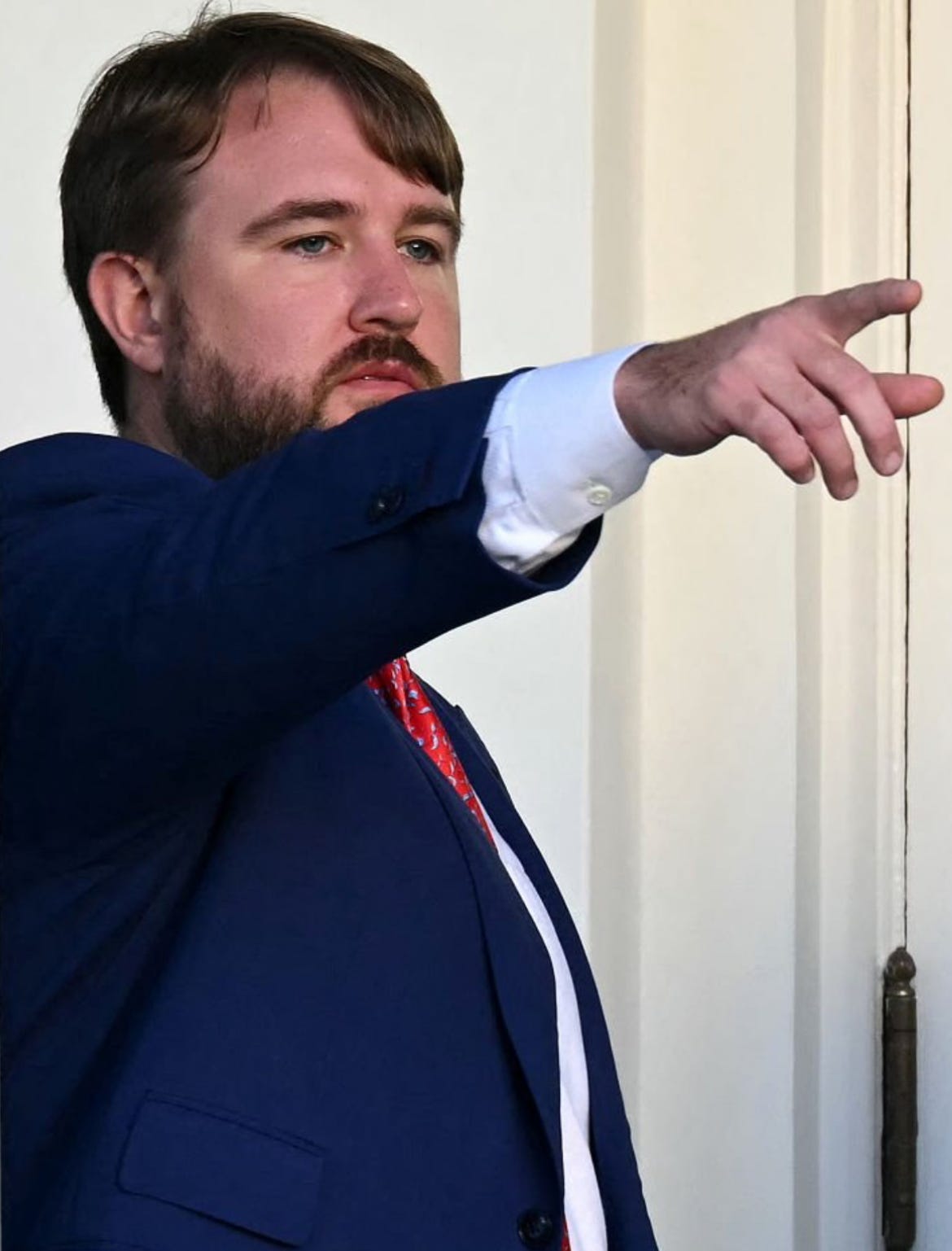
Ches McDowell
PR at Binance

https://www.politico.com/news/2025/10/25/binance-zhao-pardon-lobby-00621788
$1 billion that had recently moved through Binance to a network funding Iran-backed terror groups
in 2023, when prosecutors secured a plea deal with the world’s largest crypto exchange and a prison sentence for Zhao. Binance admitted to breaking sanctions and anti-money-laundering laws
conduct that broke the sanctions and anti-money-laundering laws has persisted at the exchange. And the law-enforcement officials said that, over the past year, Binance has started cooperating far less with their requests to obtain financial information about its hundreds of millions of users, such as by declining to provide customer details without a court order, or insisting requests are submitted via formal channels that can take months.
crime investigations team connected accounts registered to Chinese clients to digital wallets that were used by Iran to finance its proxies. In total, $1.7 billion flowed over 2024 and 2025 from the accounts, which funded Iran-backed groups including Yemen’s Houthi militants.
Iran-backed militia groups have carried out attacks on American forces in Iraq and Syria, and Tehran supports multiple U.S.-designated terrorist groups such as Hezbollah in Lebanon.
At Binance, investigators last year also uncovered 2,000 accounts that had been accessed from Iran using software that masks users’ locations. The investigators recommended asking users for additional information, according to documents. Teng, the CEO, rejected that plan
Binance’s leaders also declined to take action after its intelligence team found sailors of the Russian shadow fleet—ships used to transport sanctioned cargo, including oil from Russia, Iran and elsewhere—were being paid salaries through Binance accounts
When Binance pleaded guilty in 2023, U.S. authorities laid out a long list of bad actors that received money through the trading platform, including al Qaeda, Islamic State and Iranian cybercriminals.
Binance critically undermined the U.S. blockade on Iran’s economy, allowing U.S. users to make transactions worth over $898 million with Iranian users despite sanctions that bar financial institutions from transacting there.
another company that they said was moving funds to Iran-backed groups.
company called Hexa Whale Trading, registered in Hong Kong in 2024. Hexa had provided false documentation to open an account at Binance, which was flagged internally at the time, according to documents. Still, Binance allowed Hexa to open an account and gave it VIP client status, which reduces a user’s trading fees.
Hexa used the account to move about $500 million worth of the stablecoin tether over several months since 2024 to what investigators referred to as “Entity A.” Entity A was a group of seven digital wallet addresses that the Binance investigators concluded were linked to an Iranian network.
shadow-banking corridor run by Iran’s Islamic Revolutionary Guard Corps between Hong Kong and Tehran, enabling Chinese companies to quietly pay for Iranian oil.
IRGC is an elite branch of Iran’s armed forces that also runs swaths of its economy. It has been designated a terrorist organization by the U.S., which says it uses money it raises to purchase foreign military equipment and pay for its proxy military forces.
another account that had transferred even more funds to the Iranian network.
account belonged to Blessed Trust, the Hong Kong-based company, which helps clients convert traditional currency, such as yuan, into cryptocurrency and vice versa.
Binance’s investigators found that Blessed had transferred more than $1 billion in tether to the IRGC-run Entity A network between November 2024 and August 2025, directly or through other Binance account holders
Blessed also had a close relationship with Jukai He, who is nicknamed Rock, one of the founding members of Binance, which was launched by Zhao in Shanghai in 2017. Rock leads Binance’s so-called fiat business, which turns crypto into regular money.
In a Telegram chat between Blessed and Binance, the name of one of Blessed’s representatives appeared in Chinese characters as “Karry…friend of Rock,”
Later in the chat, a Binance VIP client manager said: “Karry the big shot, haha. Boss Rock has mentioned you before.”
Binance employees were logging into Blessed’s trading account, implying Binance to some degree was involved in the payment firm’s crypto operations. The Blessed account had been accessed from the same device, likely a phone or computer, as an account operated by one of Rock’s Binance teams
On Sept. 24, one of the investigators contacted Blessed and asked about its relationship with digital wallets that were sending money to the Iranian illicit-financing network, according to documents.
Blessed told Binance the funds sent to Entity A originated from its clients that processed bitumen, an oil product used to pave roads, as well as others in the construction industry—both sectors that Binance knew participated in the illicit China-Iran oil trade, according to documents.
The investigators’ findings on Blessed reached Binance’s senior leadership, including Teng and Perlman, in October.
On Nov. 13, Binance suspended the main investigator on Blessed and a second person, the head of sanctions and counterterrorist financing investigations, and fired them in the following weeks.
Before leaving, the sanctions head submitted an internal report summarizing the investigators’ findings. It couldn’t be determined who received the report.
On Nov. 24, other members of the investigations team told a Binance executive they would continue to investigate Blessed. Two days later, they were locked out of Binance’s systems, suspended—and fired soon after.
http://linkedin.com/in/ches-mcdowell-039ab214
Ches McDowell is PR for Binance, cryptocurrency exchange that Chinese companies quietly use to pay for Iranian oil.